

Compact turbo blower (50/60Hz)
dust collector
DM Iolus Turbo Blower (Power Supply 50/60Hz)
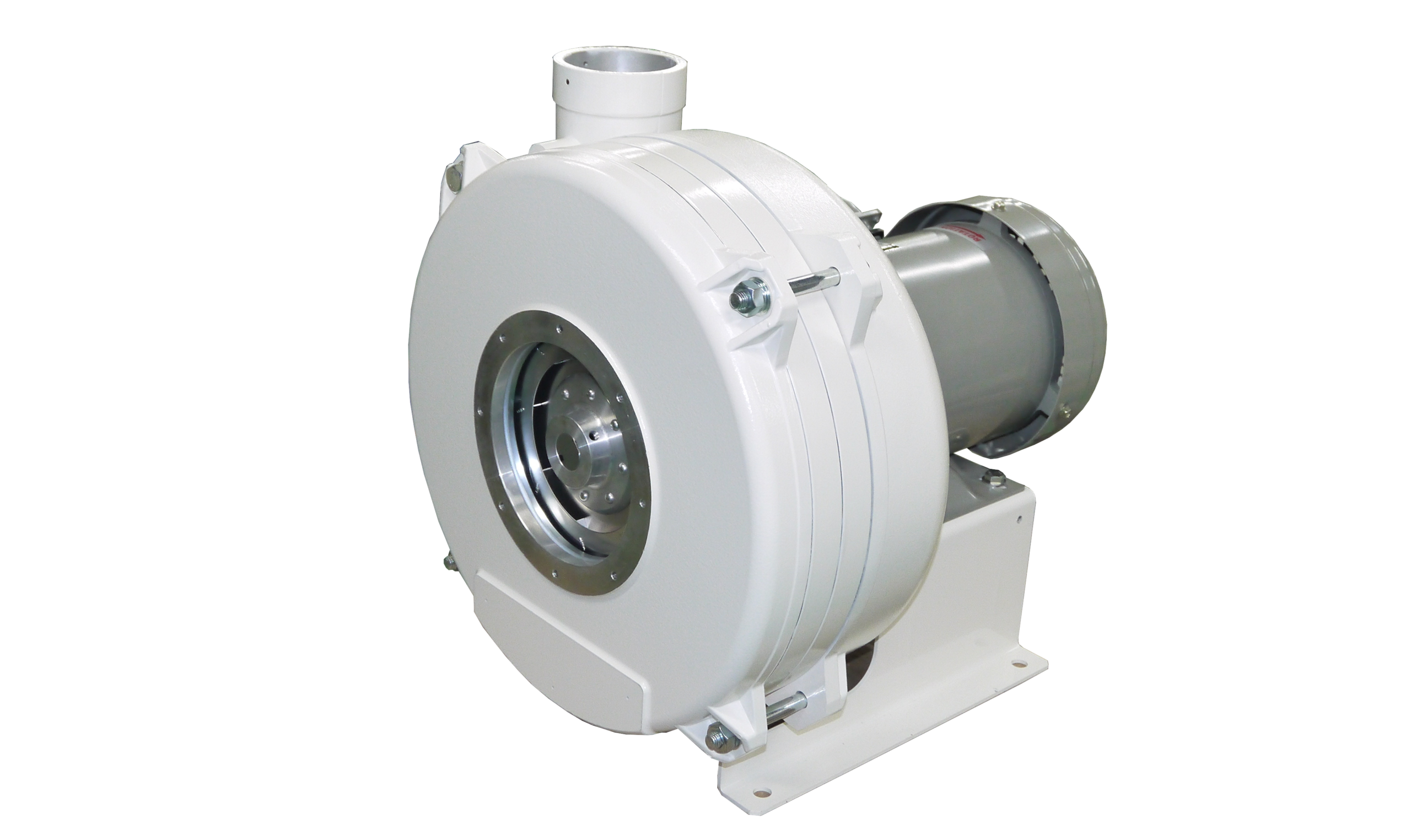
No inverter needed—just connect to a commercial power source (50/60Hz) and use it right away—maintenance-saving design. This turbo blower ensures stable airflow and static pressure while keeping installation costs low. Specifications with low resistance, especially recommended for various uses.
Overview
OVERVIEW
What is a turbo blower?
A turboblower is a type of blower that uses high-speed rotating impellas to send air.
DustLabo (formerly Vacuum Company)’s Eolus series also falls into this category.
Normally, when the motor spins the impeller at high speed, the centrifugal force forcefully pushes air outward. By controlling the airflow direction with these elements, it can generate wind with greater pressure (wind pressure) than regular fans or sirocco fans.
To use an analogy, a fan “softly sends air over a wide area,” while a turbo blower is designed to “blow (or inhale) air strongly and forcefully over a narrow area.”
When the wind pressure is high…
When wind pressure increases, resistance becomes stronger. Even in places where air is hard to breathe, such as thin pipes, long ducts, filters, or layers of clogged powder, it can push through and let air flow. The strength comes from blowing strongly into narrow objects or drawing in deeply through the filter, but the amount of air (airflow) you can move at once is reduced.
To put it simply, this is the difference.
- High wind pressure … It feels like you inhale strongly with a thin straw. The amount isn’t much, but you can suck up even the thickest stuff.
- High airflow … It feels like gulping down with a thick straw. You can carry a smooth drink all at once, but it’s powerless against stuffed food.
Strengths of DustLabo’s Turbo Blower
Strength 1: Compact size for space-saving
The Iolus TurboBlower uses its turbo technology to keep the design as compact as possible while maintaining high pressure and required performance.
The centrifugal force generated by the high-speed rotating impeller generates strong wind pressure. By perfecting this method, we can extract strong suction and airflow without relying on large boxes.
Also, small things are not just about “not having trouble finding space,”
- Creating Margins in the Design of the Entire Equipment
- Reduced effort for delivery and installation
- Flexible adaptation to layout changes
Solving and improving space-saving issues
Space-saving directly translates into design freedom. Those who draw drawings from the perspective of integrating equipment into the equipment or the equipment layout will surely feel this difference firsthand.
Strength (2): 50 years of proven track record and robustness
DustLabo’s turbo blowers have rarely led to complaints due to initial defects or malfunctions. (Excluding human effects after manufacturing)
We have established an integrated production management system from material procurement to assembly, and by mastering the craftsmanship of the blowers, we create robust and high-performance turbo blowers. With long-term continuous operation, failures are almost unlikely due to anything other than consumables.
And this robustness delivers the greatest effect after implementation.
- Reduce unnecessary costs such as replacement and installation
- No time spent on inspections or replacements
- Avoid line stops
For those integrating equipment into equipment or leading equipment installation, the ease of being hands-off is the greatest value. After installation, the equipment becomes stable and stable over the long term without any manual labor, reliably reducing costs in invisible ways.
Strength (3): Delivering the right ‘air’ to the site.
The most labor-intensive part of choosing a blower is probably adjusting airflow and pressure, such as “the performance is good but it’s over-spec for this purpose,” or “I want a bit more pressure, but the next size is too large.”
DustLabo values bridging this “gap.”
Creating airflow and pressure through various methods
- Lineup with finely divided airflow zones (05/10/15/20/25/N5 types)
- Selectable motor output to suit your needs (0.4kW to 3.7kW)
- Airflow adjustment using an inverter. You can blow as much airflow as needed while driving.
- A multi-stage turbo blower with stacked impellers. Maintaining a small body, pushing for higher pressure
- Built-in rotational speed with belt-driven type (DL/DH series)
By combining these, we aim to get closer to “this device, this machine, this condition, and the right site for this job.”
Additionally, we offer options such as intake air filters, silencers, vibration-damping rubber, hoses, and cuffs, meeting the specific needs of each site, such as wanting to keep things quiet, not passing powder through, or suppressing vibrations.
Rather than “choosing” ready-made products, they “adapt” to requirements. That’s why there’s no need to pay costs for unnecessary extra energy or compromise on performance shortages.
Product Information
INFORMATION
-
- Representative Models
- DM-1007(5),DM-1007(6S)
-
- Motor output
- 0.4 / 0.75
-
- Power Supply Usage
- 3-phase 200V 50/60Hz
-
- Airflow (maximum)
- 7.3㎥/min
-
- Static pressure (maximum)
- -7.2kPa
-
- Dimensions (mm)
- D382 × W385 × H420 (DM-1007(6S))
-
- Weight (kg)
- 28kg (DM-1007(6S))
-
- Intended Use
- Air source for dust collectors,
combustion support (such as gas ovens for factories),
adsorption and fixation of tablets, conveying
powders and chips, air supply for
cooling and drying, integration into
machinery, transport
of food and electronic components, air blowing in
printing factories
-
- Customizability
- We also support the design and manufacturing of proprietary dust collectors and collection systems starting from this turbo blower.
Please consult us about everything from selecting a blower to assembling the dust collector.
performance curve
GRAPH
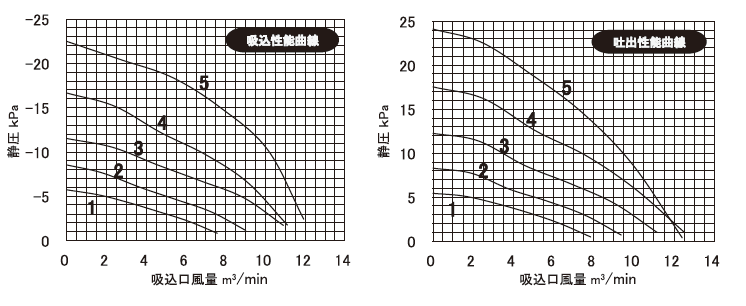
*The performance values listed are for reference only and not guaranteed.
Specifications and performance may change without notice due to component composition or improvements.
For more details, please contact our company.
