

Filter variations
Circular Filter
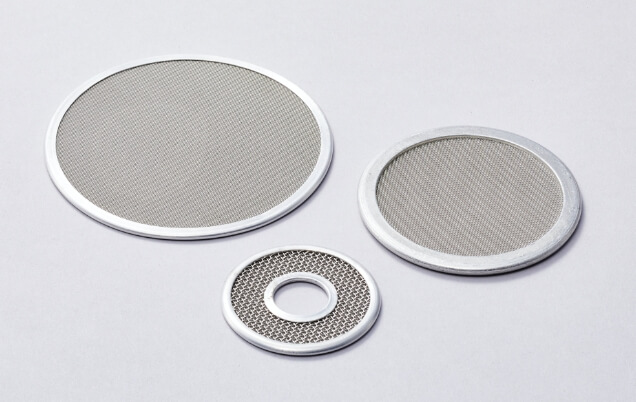
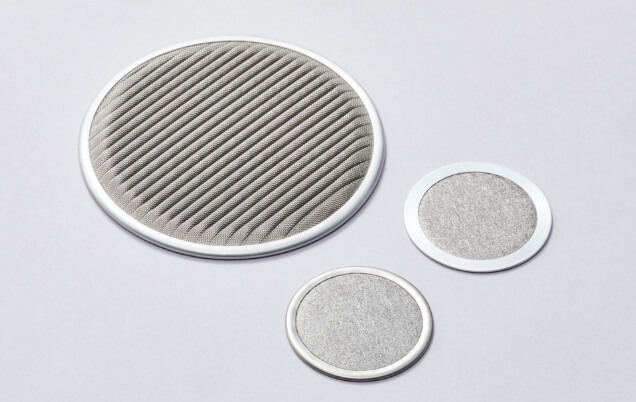
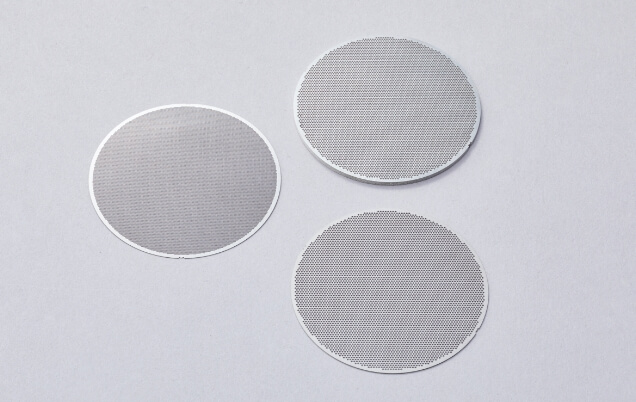
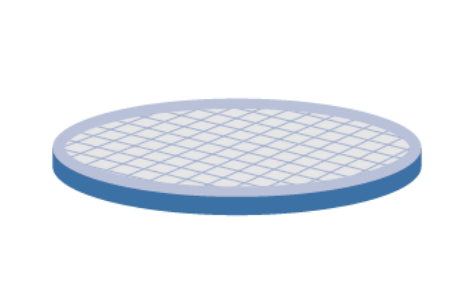
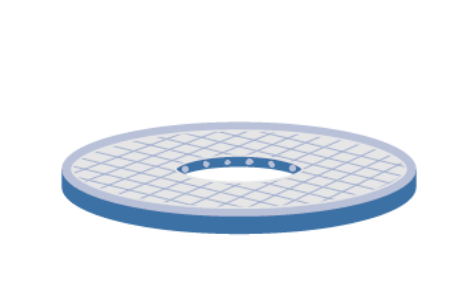
This is a filter element made using a circular filter media.
When using woven wire mesh, it is common to stack multiple mesh with different specifications. Usually, filters inside extruders used for transporting molten resin are often used with frames to improve sealing and handling, but filters inside extruders used for transporting molten resin are sometimes used without frames and left untouched.
Framed filters used in the spinning process are called pack filters, and besides the circular type, there are also circular and square types.
As mentioned above, some are incorporated into various manufacturing equipment, while others are used as filtration devices between manufacturing processes, such as Nutche filters. It is also sometimes used to rectify fluids rather than for filtration.
Square Filter

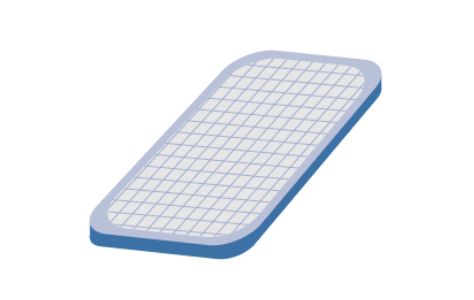
This is a filter element made using a rectangular processed filter media.
It is sometimes incorporated into various manufacturing equipment; for example, in the spinning process, a rectangular framed filter is used depending on the type of spinning nozzle.
It is also used for installation inside rectangular ducts or at fluid outlets. It is also sometimes used to rectify fluids within the manufacturing process rather than for filtration.
Cylindrical Filter
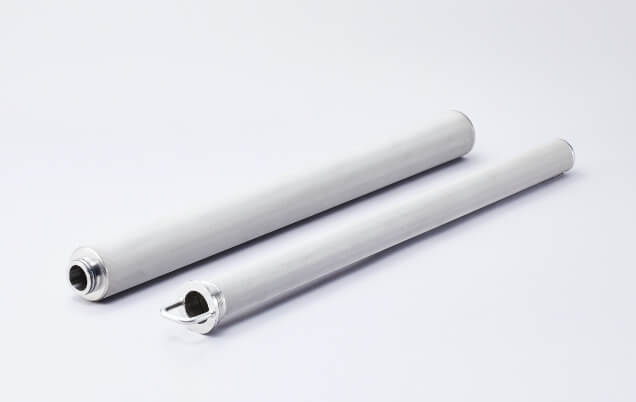
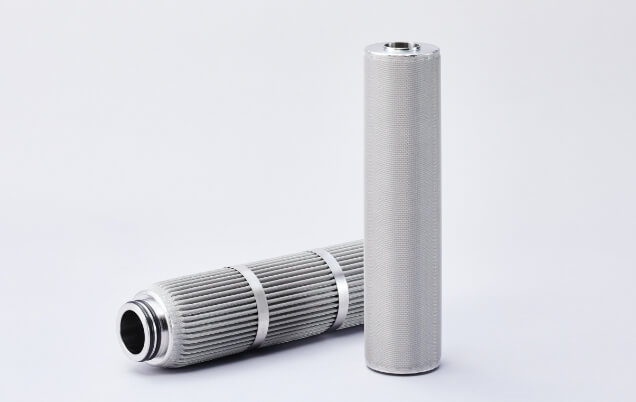
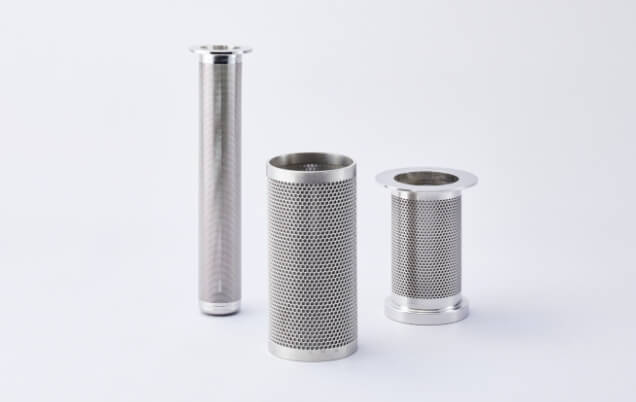
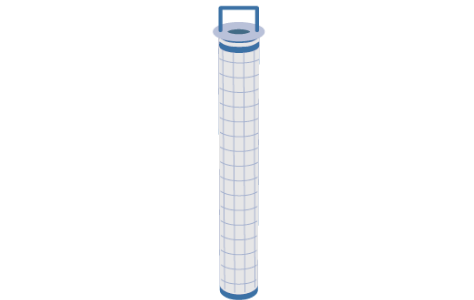
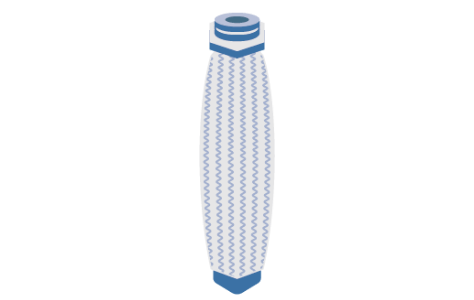
This is a filter element made using a cylindrical filter media.
They are often used in specialized filtration devices (filter containers, filter bodies, housings). Common methods include attaching it to the partition plate inside the filter container or clamping the filter flange into the main flange.
Methods for attaching to partition plates include threading internal threads to partition plates and external threads to filter fittings and screwing them in, attaching O-rings to filter brackets and inserting them into partition plates, and securing the filter and partition plate with bolts and nuts.
Since containers are made specifically for filtration, it is easy to adjust usage conditions and filter characteristics. To increase the filtration area, multiple filter elements may be installed within a single container.
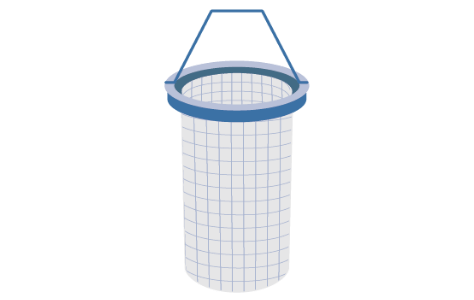
Because these filters have a slender cylindrical shape, they are also called cartridge filters, tube filters, or candle filters. Conversely, cylindrical filters with a larger bodily circumference are sometimes called baskets.
Leaf Filter

These filter elements are circular or square in shape, and multiple sheets are set in leaf-like containers for use.
A single round or square filter can only be used for a relatively small filtration area, but leaf filters can be used in parallel to filter large areas. Each filter is connected by a common pipe, and the filtrate passing through each filter is merged through a common pipe and transported to the next process
Pleated Filter

This is a filter element made using a pleated (pleated) filter media.
Filter shapes are available in circular, square, and cylindrical shapes. Because it is pleated, it allows for a larger filtration area compared to flat circular, square, or cylindrical filters.
However, pleating them can reduce cleaning performance. Depending on the type and specifications of the filter media, some may not be pleated.
For more details, please contact us.
Conical Filter

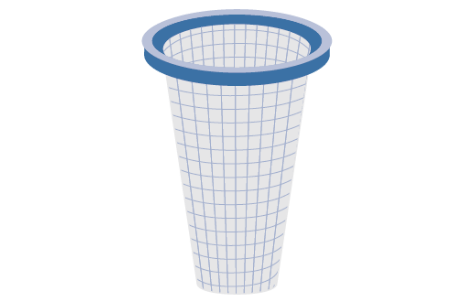
This filter element uses filter media processed into a conical shape, also called a cone filter.
It is often used sandwiched inside piping and is also called cone filter, temporary filter, or temporary filter (temporary strainer). It is difficult to produce long and thin items like cylindrical filters, but they are compact and offer excellent cleaning and handling capabilities.
Strainer

Filters with relatively coarse eyes (open eyes, high filtration accuracy) are called strainers.
Generally, a filtration accuracy of about 100–150μm is considered the boundary; those with higher filtration accuracy are called strainers, and those with smaller filtration are filters. For cylindrical filters, basket-type strainers are widely used, while cartridge-type filters are widely used.
For example, in woven wire mesh, if the filtration accuracy drops below 100μm, the initial pressure loss suddenly increases and clogging becomes severe, so cartridge-type systems are often adopted to reduce filtration resistance even slightly.
On the other hand, higher filtration accuracy results in lower initial pressure loss, minimal clogging, and easier removal through cleaning, making single-basket types with better handling often adopted.
